



Convectors



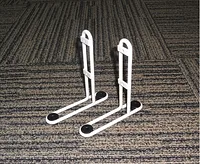
The operation of a convection heater is based on the principle of air circulation in the room. The convector has openings at its top and bottom. Cold air masses are heavier and settle in the lower layers of air in the room where the convector is installed. This cold air enters the convector through the openings at the bottom. It then reaches the required temperature via the heating element and exits through the openings at the top of the unit.
In this way, cold air masses, heated in the convector, rise to the ceiling, cool there and sink back down, then inevitably re-enter the heater, and so on in a cycle. This creates a closed circulation cycle in the heated room.
Advantages of an electric convector
The strengths of this heating appliance include:
- No need to deal with preliminary bureaucratic formalities, since installing such a unit does not require any special permits.
- Simple installation. To install an electric convector, there is no need to call in specialists. All you need to do after purchasing the unit is bring it home and hang it on the wall, which can be done relying only on your own skills.
- The appliance makes no noise during operation, since it has no moving parts. Because of this, it can be installed in any room.
- Heats up quickly.
- Easy to maintain.
- Precisely maintains the room temperature.
- Compact size.
- Costs much less than boilers or radiators.
- Does not burn oxygen (since the heating temperature does not exceed 60°C) and does not dry out the air.
- High efficiency (up to 95%).
- High electricity efficiency.
- No unpleasant odor from the appliance.